From Cooling Challenge to Energy Opportunity: Students Explore Data Center Waste Heat Recovery

Luca Taglialatela, Anastasia Stamatiou, HSLU, 09.06.2026
How can waste heat from data centers become a useful heat source for the energy transition? To what extent can advanced cooling technologies, immersion cooling and thermal energy storage help create this synergy? These questions are central to the MODERATOR project and were also at the heart of this semester's Applied Sustainable Systems module at the Lucerne University of Applied Sciences and Arts (HSLU).
The topic is easy to understand, but difficult to solve. Data centers support research, cloud services, artificial intelligence and many digital tools. At the same time, almost all the electricity used by servers becomes heat. If this heat is simply removed and released to the environment, a potential local energy resource is lost. Recovering it can reduce fossil heating demand, but only if the heat can be used at the right temperature, in the right place and at the right time.
HSLU is a Swiss university of applied sciences with a strong focus on practice-oriented education. In the Bachelor of Science in Energy Systems Engineering, students learn to analyse energy technologies not only as individual components, but as parts of wider environmental, economic and social systems. The students involved in this module were mostly in their final semester, close to entering professional practice as junior engineers.
Research meets education and practice
The module created a valuable bridge between research, education and real-world application. Students did not work on predefined textbook exercises, but on open-ended case studies connected to ongoing European research and practical stakeholder needs. In this sense, they acted as student researchers: exploring local boundary conditions, gathering data, comparing technical options and translating broad research questions into preliminary system concepts.
For MODERATOR, the activity was also a targeted dissemination format. Instead of presenting project results only to specialised research audiences, the module brought MODERATOR topics directly to future junior engineers who will soon work on energy, infrastructure and sustainability challenges. At the same time, the collaboration with mentors and project partners helped strengthen the wider MODERATOR ecosystem by connecting students, researchers, technology providers, infrastructure operators and potential heat users.
The exchange also created value for the research project itself. The student teams produced early-stage analyses, stakeholder perspectives, energy calculations and case-study insights that can help identify promising applications, open questions and directions for further investigation.
The module benefited from mentors and partners including Tiziano Belotti from CSCS, Daniel Haenggi from Renercon, Gabriele Humbert from Empa and HEATWISE, Halvard Thon from SINTEF Industry, Dimitrios Gkrimekis and Nikos Damatis from ITA Group, as well as Dimitris Koutsonikolas for bringing in the MODERATOR project context. Through this collaboration, the MODERATOR ecosystem was further expanded with important stakeholders who contributed data, expertise and practical perspectives.
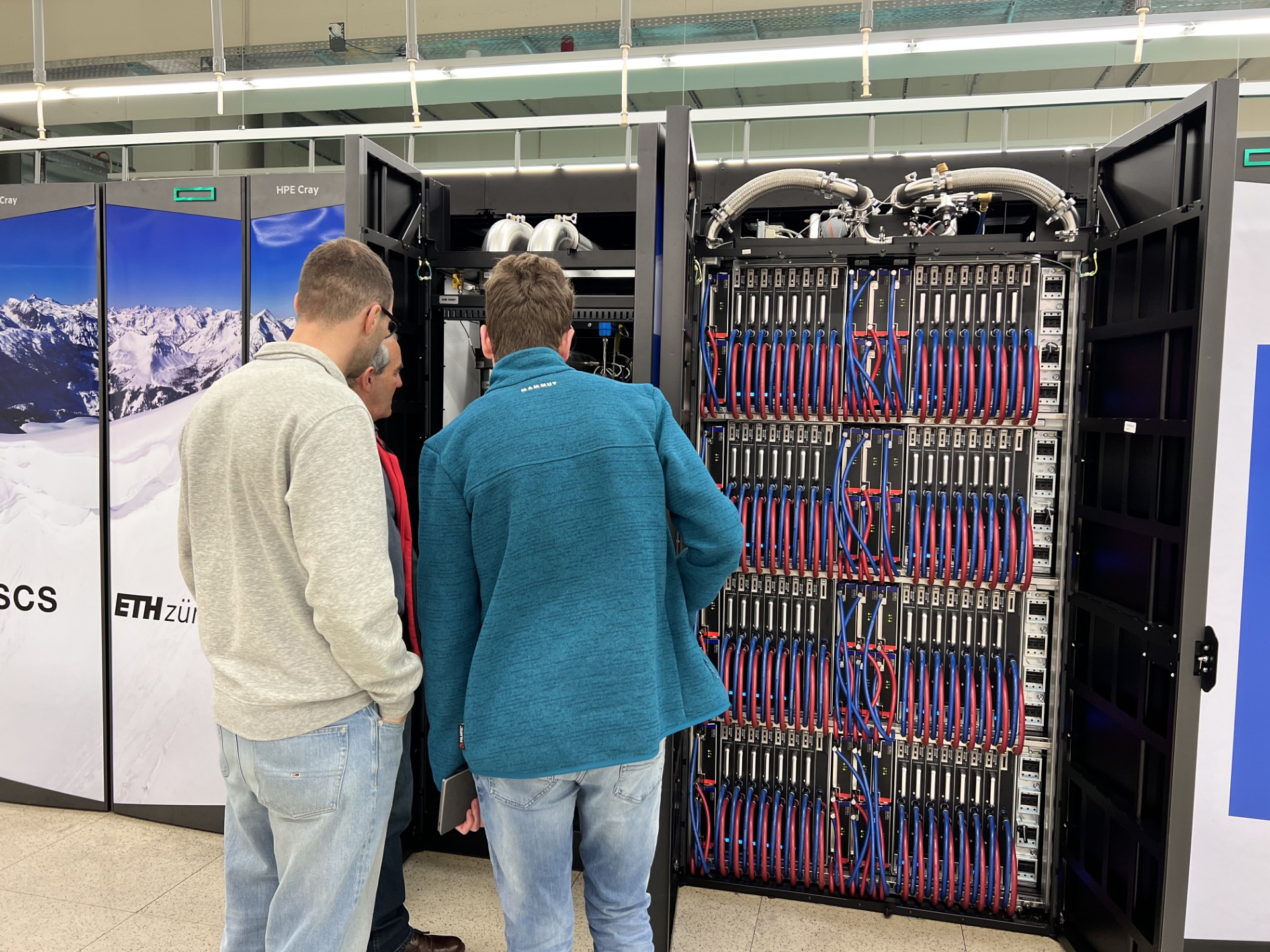
Students learning about direct liquid cooling mechanisms at Swiss National Supercomputing Center (CSCS) from Tiziano Belotti and discussing how high-performance computing infrastructure can become a source of recoverable heat.
Five case studies, one systems-thinking challenge
During the semester, the student teams explored several open-ended cases: district heating in the Beringen-Schaffhausen region, the NEST building at Empa, the Lugano-Cornaredo area around CSCS, greenhouse heating in Greece, and chocolate factories in Switzerland. These case studies show that waste heat recovery is not one single technology application or business case. It depends on local heat demand, existing infrastructure, environmental limits, ownership models and stakeholder cooperation.
The students moved from broad questions to structured concepts. They reviewed literature, analysed local boundary conditions, mapped possible heat users, compared cooling and heat-recovery options, and carried out energy calculations. They also considered environmental and techno-economic aspects, because a solution that works technically still needs to make sense for users, operators and communities.
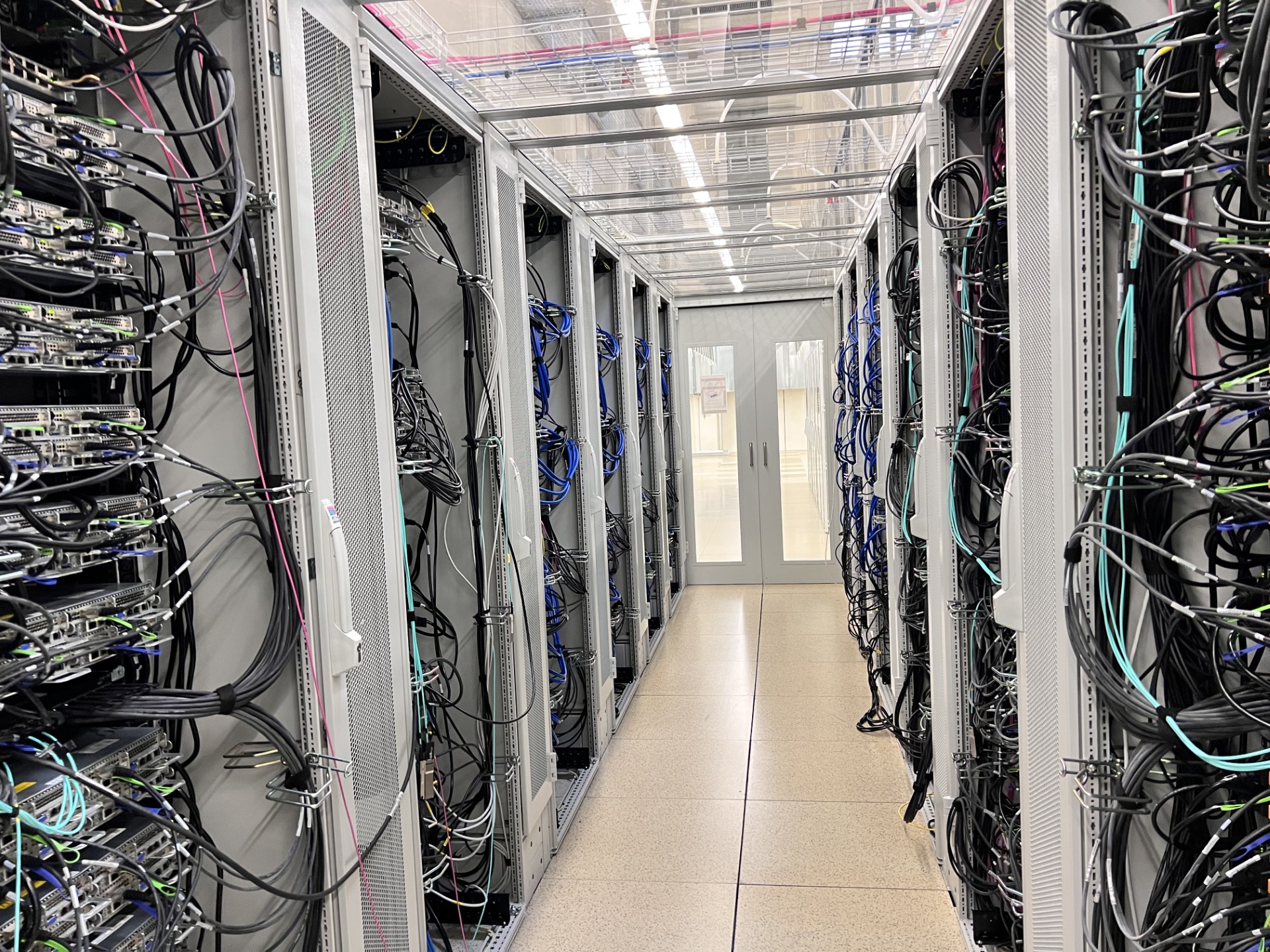
A view of the computing infrastructure at CSCS. Almost all electricity used by servers is converted into heat, making cooling technology central to waste heat recovery.
Connecting MODERATOR and HEATWISE
A particularly valuable link was created with HEATWISE, a sister Horizon Europe project focused on energy-efficient edge data centers. The NEST case study at Empa was connected to HEATWISE and allowed students to explore how edge computing infrastructure can be integrated into tertiary buildings through advanced cooling, heat recovery and thermal management.
This collaboration helped bridge MODERATOR’s focus on immersion cooling and heat reuse with related European work on edge data centers and building energy systems. It also showed how sister projects can reinforce each other through shared case studies, educational activities and exchanges with students and external partners.
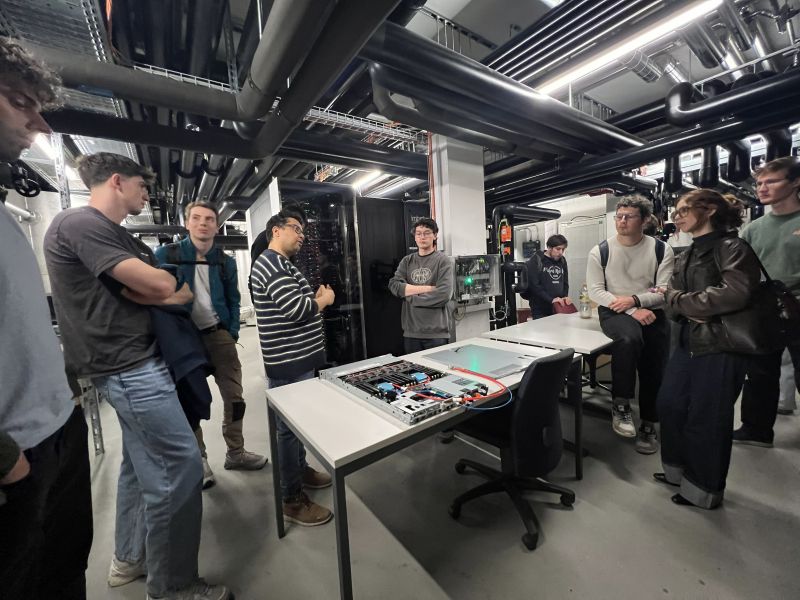
At NEST, Empa, was introduced to direct-to-chip liquid cooling with phase-change fluids and its potential to improve heat capture from edge data centers by HEATWISE researchers.
What the students learned
A key learning outcome was that students gained insight into the state of the art in data center cooling and heat-recovery technologies, while also becoming more aware of the role that data center waste heat can play in the energy transition.
One important lesson was that the amount of available heat is only the starting point. A data center may produce heat continuously, while buildings, greenhouses or factories may need it at specific times or at higher temperatures. This mismatch makes system design essential. Heat pumps, thermal storage, district heating connections, smart controls and clear operating agreements can be just as important as the data center cooling technology itself.
For students, the module was also a reminder that sustainable engineering is not only about choosing efficient technologies. It is about understanding systems, asking good questions, communicating trade-offs and turning complex energy challenges into practical action.
Why it matters beyond the classroom
For clusters, SMEs, municipalities and building owners, the practical message is clear: waste heat recovery can support the energy transition, but it requires collaboration between digital infrastructure, thermal-energy planners and end users. The cases studied this semester show possible applications in cities, campuses, industry and agriculture. They also show why early-stage analysis is useful: it helps identify which ideas deserve more detailed engineering, stakeholder dialogue and investment planning.
By connecting education, research and real-world case studies, the activity showed how MODERATOR concepts can inspire and inform the next generation of sustainable energy engineers. At the same time, it demonstrated how an educational format can contribute to project dissemination, ecosystem building and the exploration of future applications for data center waste heat recovery.
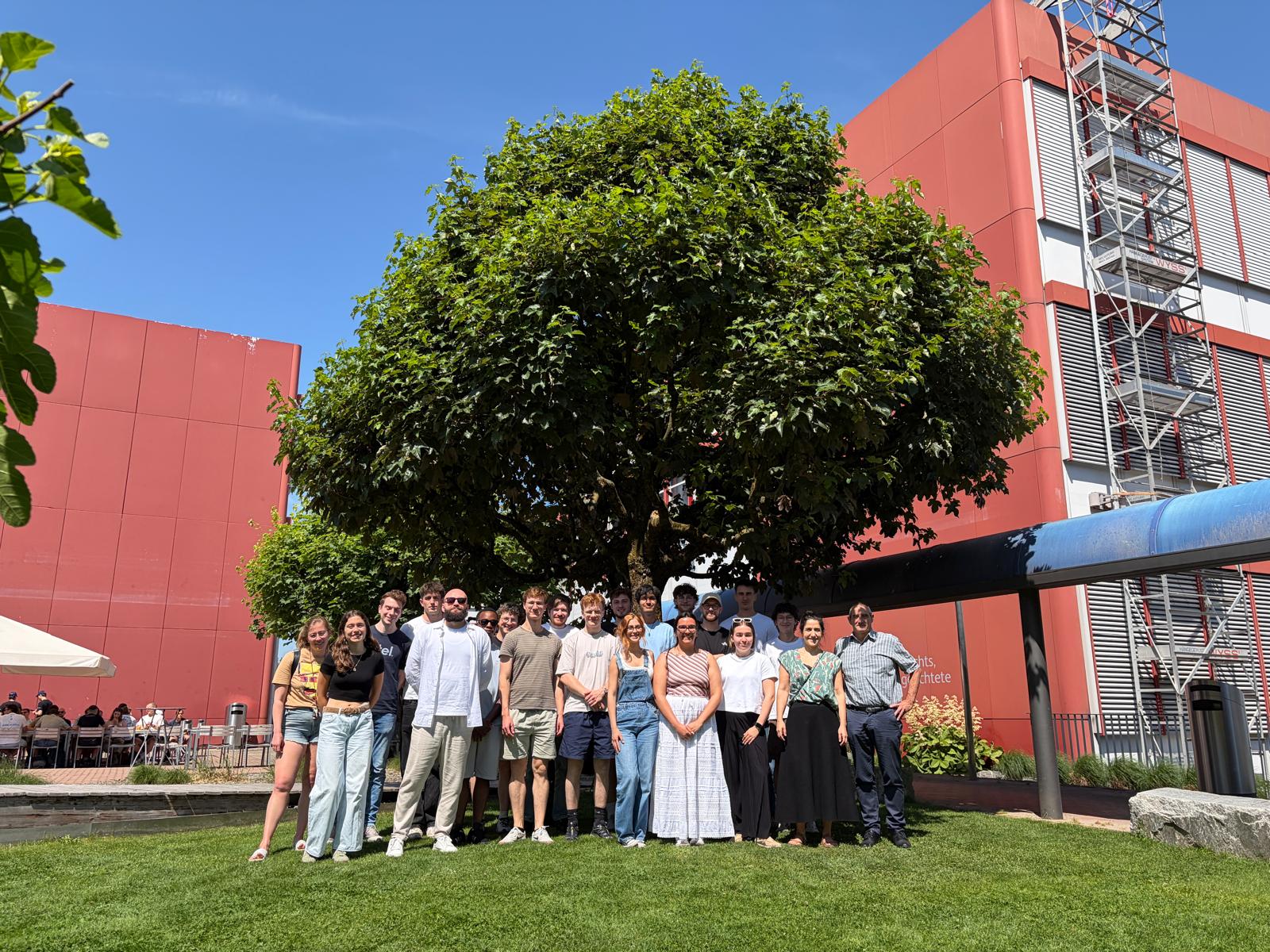
The Energy and Environmental Systems Engineering (EESE) student groups who worked on the five projects together with module responsible and MODERATOR researcher Prof. Anastasia Stamatiou and Tiziano Belotti from CSCS